
What do boats, cakes, and pomegranates all have in common? They all have a place in a traditional Greek Christmas. Find out how they celebrate in the Mediterranean with Christmas traditions in Greece.
While many Christmas traditions are similar across the globe, many countries have their own special traditions and ways of celebrating the holiday season. For starters, Christmas in South Africa includes a Braii as opposed to a roast dinner.
But how do they celebrate Christmas in Greece? The holiday traditions in Greece may be more different than you think!
Christmas Traditions in Greece: How do they celebrate Christmas in Greece?
When is Christmas celebrated in Greece?
Traditionally Christmas celebrations in Greece officially last for 14 days, starting on Christmas Eve and ending on Epiphany (6 January) with the Great Blessing of Water.
As Greece follows the Gregorian calendar, the Greek Orthodox Church celebrates Christmas on 25 December.
Kalandas on Christmas Eve
Not too dissimilar to many other countries, on Christmas Eve in Greece, it is a tradition for the children to take to the streets to sing Kalandas (carols).
However, many will carry with them a decorated boat which is often painted gold and covered in nuts. If the children sing well, they may be given money, as well as things to eat like nuts, sweets, and dried figs – many of which would be placed inside their boats!
Karavaki – The Greek Christmas Boat
Decorated boats are a staple in Greek holiday traditions. As Greece is a maritime country, a tradition was started many years ago to decorate boats at Christmas time.
This pastime usually takes place on December 6th, the feast Day of Saint Nicholas also known as the Patron Saint of Sailors, and will be displayed until January 6th. Saint Nicholas was believed to help bring the sailors safely back to port.
This tradition was nearly wiped out in 1833 when the Christmas Tree was first introduced to Greece, however, at this point, decorated trees were seen only for upper-class households and therefore the boats continued in Greece.

No presents on Christmas day
In many countries and cultures, it is tradition to give gifts on Christmas day, however, a Greek Christmas is slightly different.
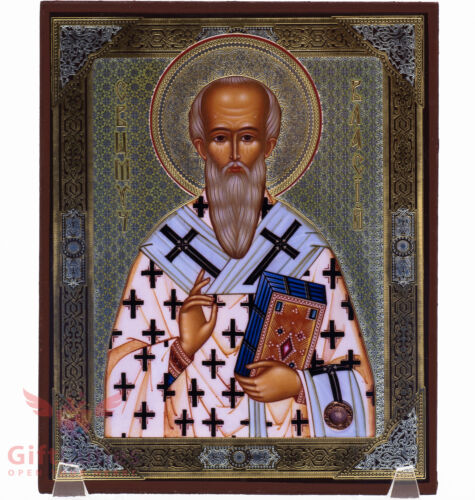
While Christmas Day in Greece is still a day for family gatherings and meals, the tradition of gift giving is usually reserved for New Year in celebration of the feast day of ‘Greek Santa’ – Aghios Vasilis. Traditionally Greek children don’t receive presents from Santa Claus, on Christmas Eve but are visited by Agios Vasileios the Greek Father Christmas, on New Year’s Eve.
Saint Vasileios became the Greek Father Christmas as a result of his kind and humble character and his generosity towards the poor to whom he distributed all his worldly goods.
While Father Christmas sets off from the North Pole on his reindeer-led sleigh, Aghios Vasilis sets off on his journey from Caesarea (Kayseri, modern-day Turkey) on New Years’ Eve.
Vasilopita
Aghios Vasilis is also involved in the New Years’ tradition of Vasilopita cake. This particular cake contains a charm or coin hidden within, whoever finds the gift is said to be blessed with good fortune throughout the upcoming year.
This tradition is said to be based on a tale of Aghios Vasilis, who once found himself in possession of many valuables belonging to the citizens of Caesarea with no way of knowing what belonged to whom. As a solution, he had them all baked into buns, and handed them out to the people.
Kalikantzaroi – Holiday Goblins
Aghio Vasilis may bring gifts over the holiday season, but it is not all good. The Greek Christmas tradition of the Kalikantzaroi. Tradition states these small creatures emerge from the underworld during the holiday season, lurk at night, and possess the potential to cause serious damage if they enter one’s home.
Not particularly bright creatures, it is thought that the kalikantzaroi can’t count past three. The number three holds great significance in Christianity, as it represents the Holy Trinity, and it is for this reason that it is said that the little creatures are unable to even utter the number.
Those hoping to keep the goblins away place a colander outside of their doorways, as the Goblins will sit all night trying to count the holes, never making it past the number two — rather than entering the house and running amok.
Other ways to keep the pesky creatures away include keeping a fire burning all night, reciting a prayer to the Holy Trinity, marking your doorway with a cross, or, in Cyprus, throwing out some little sausages and fried dough to appease them.
Epiphany on January 6th
The end of the holiday season is marked with a further bank holiday on January 6th. This Greek holiday tradition commemorates the baptism of Christ in the final celebration of the winter holidays known as the Epiphany and also referred to as Theophany or Ta Fota (The Lights).
On this day the Great Sanctification of Water also takes place and is held near bodies of water across Greece (seas, lakes, rivers – the biggest celebration of all takes place at the Port of Piraeus).
Following church services, people gather by the edge of the water, which the priest blesses by casting a cross into it. Young men then dive in to retrieve it; the one who makes it through the cold water to the cross first, and returns it to the priest, is awarded a special blessing.
Traditional Greek Christmas Food
Pork and celery stew is the most traditional main dish that is served on Christmas Eve in Greece. The tradition sees a particular lemon and egg sauce typically used in various Greek foods.
Lamb is the main traditional meal and meat eaten by Greek people on Christmas day. This will often be roasted or prepared on an open spit. Either way, it is often served with It’s often served with spinach and cheese pie along with various salads and vegetables.
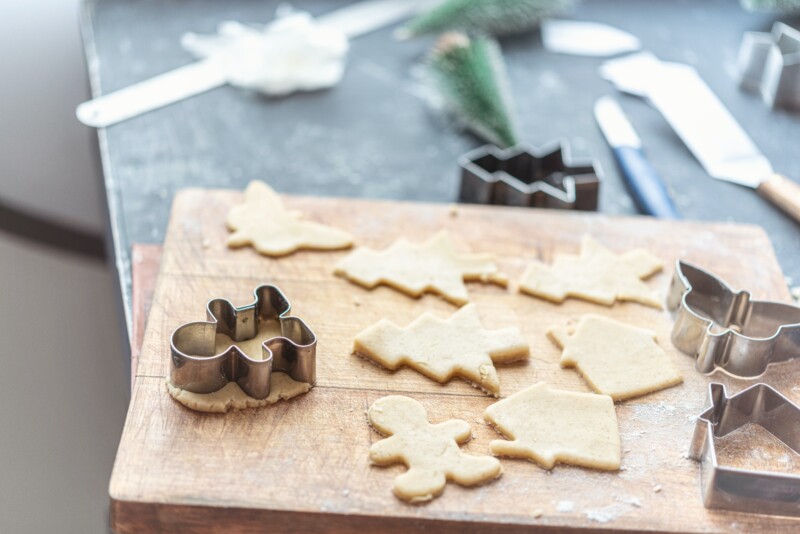
Sweet treats in Greece at Christmas come in the form of cookies. Kourabiedes are buttery shortbread-like almond cookies, made with rosewater and covered in very generous layers of powdered sugar. Melomakarona are soft and syrupy, topped with walnuts and gingerbread-like in flavor, but the most important ingredient is honey.
As previously mentioned, Vasilopita cake is always served on New Year, in order to receive the blessing for the upcoming year.
While certain Greek Christmas traditions may be very different from other places around the world, the main principle is the same. Christmas in Greece is a time for celebrating with family over a delicious meal, like many countries, religion plays a big part during the holiday season.